

The Digital Gameplan
The Digital Gameplan
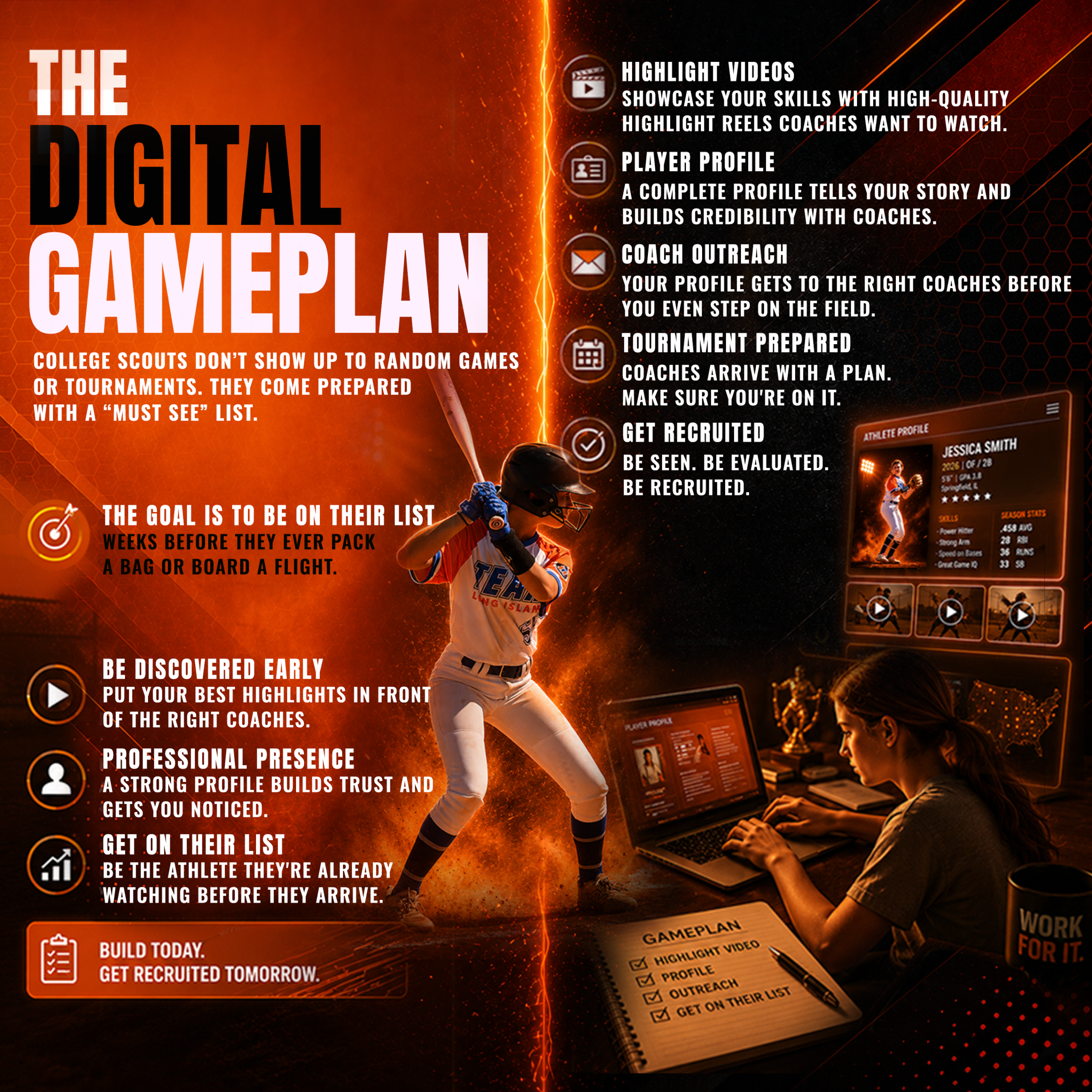
Coaches and scouts typically use the “know before you go” strategy when planning their recruiting trail. Scouting random games or tournaments in search of talent is highly inefficient. Instead, recruiters travel with a curated list of specific athletes, knowing exactly when, where, and against whom they will compete. While an incredible player not on that list might occasionally catch a college coach’s eye, relying on accidental discovery is a losing strategy. The goal is to be on their list weeks before they ever pack a bag or board a flight.
The 4 Stages of the Recruitment Process
Before launching any outreach, it’s important to understand exactly how a coaching staff filters through the prospects, which include athletes who have expressed interest, and athletes whose performance sparked an interest, but who have not reached out.
Stage 1: Identification
Programs build their initial database using independent scouts, camp rosters, and verified video submissions.
Stage 2: Evaluation
Staff members review game tape to grade athletes’ physical attributes, performance, and on-field body language. They also evaluate athletes ‘ academics to ensure they meet college eligibility requirements.
Stage 3: Comparison
Athletes who pass the evaluation stage are ranked directly against each other based on position needs, GPA, and projectable metrics.
Stage 4: Offer
Final scholarship offers or walk-on spots are extended only to the top tier of that ranked pool.
Benchmarks
| Position | Metric | D1 | D2 | D3 | NAIA / NJCAA |
|---|---|---|---|---|---|
| Pitchers | Pitching velocity | 63+ mph | 58-62 mph | 55-58 mph | 55+ mph |
| Change-up differential | 15-20 mph slower | 12-18 mph slower | 10-15 mph slower | 10-15 mph slower | |
| Movement pitches | 2+ quality pitches | 1-2 quality pitches | 1 quality pitch | 1 quality pitch | |
| Home-to-first | 2.9-3.0s | 3.0-3.1s | 3.1-3.2s | 3.1-3.3s | |
| Catchers | Pop time (2B) | 1.8-2.0s | 2.0-2.1s | 2.1-2.3s | 2.1-2.3s |
| Throw velocity | 60+ mph | 55-60 mph | 52-55 mph | 52-55 mph | |
| Home-to-first | 2.9-3.1s | 3.0-3.2s | 3.1-3.3s | 3.1-3.3s | |
| Batting avg | .300+ | .280+ | .260+ | .260+ | |
| Infielders | Home-to-first (RHH) | 2.9-3.0s | 3.0-3.1s | 3.1-3.2s | 3.1-3.2s |
| Home-to-first (LHH) | 2.8-2.9s | 2.9-3.0s | 3.0-3.1s | 3.0-3.1s | |
| Throw velocity | 58+ mph | 55-58 mph | 52-55 mph | 52-55 mph | |
| Batting avg | .320+ | .290+ | .270+ | .270+ | |
| Outfielders | Home-to-first (R) | 2.8-3.0s | 2.9-3.1s | 3.0-3.2s | 3.0-3.2s |
| Home-to-first (LHH) | 2.7-2.9s | 2.8-3.0s | 2.9-3.1s | 2.9-3.1s | |
| Throw velocity | 60+ mph | 58+ mph | 55+ mph | 55+ mph | |
| Batting avg | .320+ | .290+ | .270+ | .270+ |
The groundwork for college recruitment can safely begin in middle school. Early introduction emails lay the foundation for long term relationships with college coaching staff.
The introductory subject line must instantly tell a coach who that athlete is. Do not use vague headings.
- Suggested Subject Layout: [Highlight or Skills Video] –[Name] – [Grad Year] – [Position] – [Standout Metric or GPA]
- Personalize each email
Coaches evaluate video with a critical eye, looking for an athlete that stands out from the rest.
- Cut the Filler: A highlight video should be just that – a video made up of an athlete’s highlights. Stay away from fielding routine ground balls, easy pop ups, or subpar base hits just to increase your clip count.
- Keep it high level: If possible stick to top-tier athletic plays to keep a coach interested when comparing you to others.
- Be Brief: The initial introduction is a teaser designed to verify an athlete’s athleticism, not a full game replay. Respect the coach’s time.
Beware- Videos may also give a coach a reason to cross you off their list. Content is key. Be sure to send your best!
Sustaining recruitment momentum requires a disciplined communication schedule based on that athlete’s current grade:
- 7th Grade: Contact programs every 5 to 6 weeks
- 8th & 9th Grade: Contact programs every 2 to 4 weeks
- 10th Grade & Above: Contact programs weekly or bi-weekly
Never send an empty follow up email to a college coach. Every message must contain useful updates that call further attention to an athlete’s recruiting profile. Keep college coaches engaged by sharing updates:
- Highlight reels of a singular play, game, tournament, or season
- New personal records including pitching velocity, overhand throwing velocity, and exit velocity
- Recent physical milestones in the weight room and home to first speeds
- Academic updates including recent report cards, honors, or test scores
- Confirmed upcoming tournament schedules with exact dates and field locations
Recruitment is a year round process. Maintaining this communication schedule during the winter months demonstrates an athlete’s work ethic, determination, consistency, and genuine interest in that college’s softball program.
Relying solely on direct email lessens the chances of an athlete getting noticed. Today’s scouts often utilize platforms like X and Instagram to track high school talent in real time.
A well-timed highlight clip appearing on a coach’s social feed while they are traveling can trigger immediate interest. This typically leads to an exhaustive review of an athlete’s entire profile to ensure your character matches their team culture.
Coaches frequently post their travel schedules on social media at the end of their collegiate seasons. They use these public posts to ask prospects for tournament schedules.
- Don’t Just Drop a Link: Avoid sending a generic schedule graphic.
- Personalize the Pitch: Detail who you are, your position, and why that coach should build their tournament itinerary around seeing your specific games.
Remain consistent across email, social media, and recruiting profile pages. When coaches see an athlete live and in person, they are verifying what they have already seen on video. Your videos are there not only to help market you as a player, but to document your performance.
Your online profiles should balance four specific categories:
- On-Field Performance: Live game action and tournament clips.
- Daily Training: Cage work, private instruction, and strength & conditioning.
- Academic Achievements: Report cards, honors, and school involvement.
- Character: Photos with teammates that display positive body language, and your genuine love for the game.
College coaches view athletes’ social media accounts as an unfiltered window into their maturity. A single inappropriate post, repost, or comment can destroy years of recruiting progress in seconds.
Creating separate personal and softball accounts on social media is considered best practice. However, understand that college coaches and recruiting staff will perform a deep dive to discover who athletes truly are behind the scenes.